Why Building Community is Good for Your Mental Health (Even if You're an Introvert)
- Awaken With Ashley Life Coaching
- Jan 2
- 6 min read

There's a persistent myth that introverts thrive in isolation; that we're somehow wired to heal and grow better when we're alone with our thoughts, our journals, and our carefully curated self-improvement routines. But here's what the research actually tells us: community engagement significantly improves mental health by reducing isolation, building resilience, and creating a sense of belonging that buffers against depression, anxiety, and stress. This holds true regardless of where you fall on the introversion-extroversion spectrum. The difference isn't whether introverts need community (we absolutely do), but how we build it in ways that feel nourishing rather than draining.
The Science Behind Community and Mental Health
When we talk about community being good for mental health, we're not just sharing feel-good platitudes. The research is clear and compelling.
Reducing isolation saves lives. Long-term loneliness increases the risk of anxiety, depression, and stress, while regular social interactions protect your mental health by helping you feel less isolated. Community connections serve as an early warning system that encourages people to seek help and fosters resilience during difficult times.
Belonging calms your nervous system. Being part of a community taps into our fundamental need to belong, which actually calms your nervous system, reducing heart rate and activating brain regions that help you manage stress. This feeling of acceptance and purpose is crucial for mental well-being, particularly for marginalized groups who may experience exclusion elsewhere.
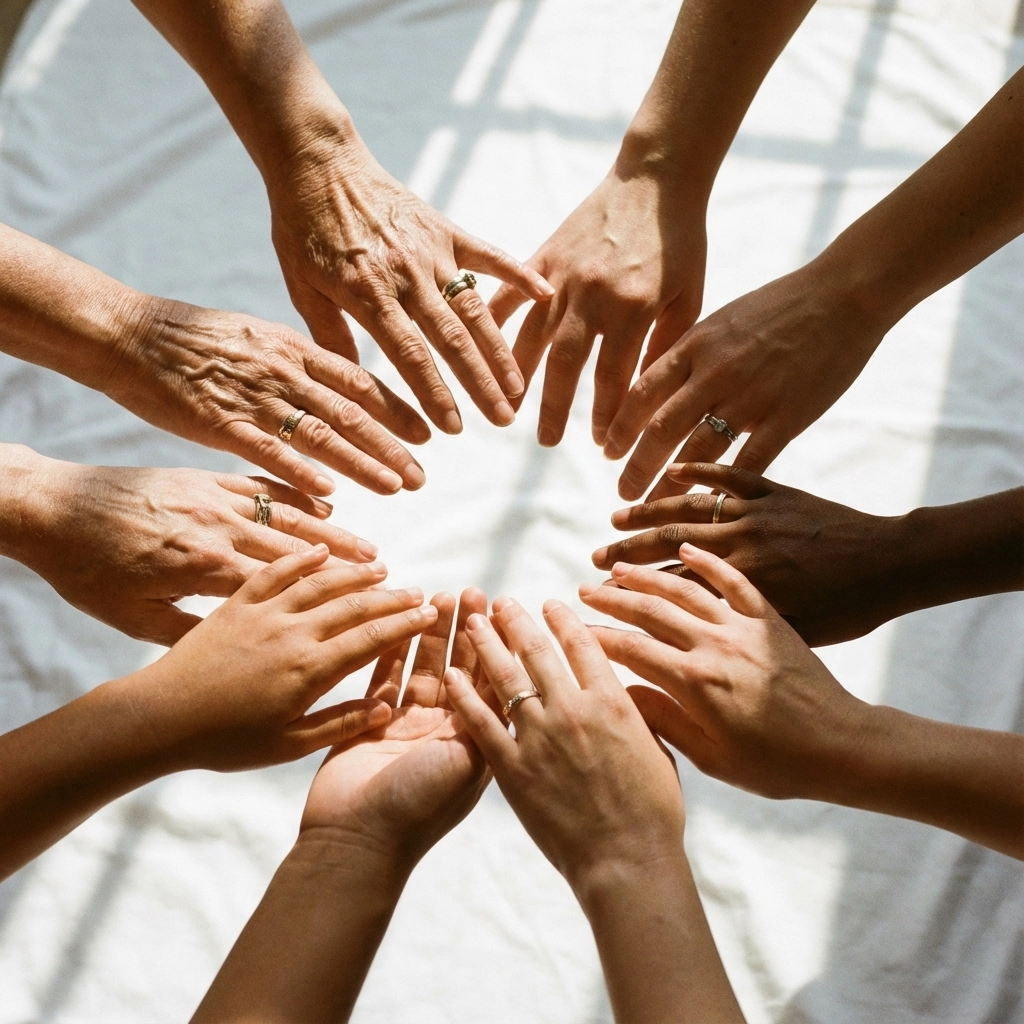
Community builds emotional resilience. Participating in community activities creates strong social bonds and emotional stability. These networks act as buffers against stress, depression, and anxiety, making recovery faster and more sustainable. People with strong social networks experience less stress and fewer mental health struggles overall.
The benefits extend beyond crisis management, too. Strong community ties help older adults experience lower rates of depression and anxiety, support parents navigating challenges, and provide crucial support for people managing long-term health conditions.
Why Introverts Especially Benefit from Mindful Community
If you identify as an introvert, you might be thinking, "But community activities exhaust me! How can something that drains my energy be good for my mental health?"
Here's the thing: the exhaustion many introverts experience around community isn't because we don't need connection; it's because we're often trying to engage with community in ways that work against our natural rhythms and preferences.
Traditional ideas of community building, such as large group events, small talk, being "on" for extended periods, can indeed feel overwhelming. But community doesn't have to look like that. In fact, some of the most meaningful connections happen in quieter, more intentional spaces.
Introverts often crave depth over breadth. While extroverts might energize from meeting lots of new people, introverts typically find more value in developing a few meaningful relationships. This actually aligns perfectly with what mental health research shows us about effective social support: it's quality, not quantity, that matters.
Shared activities reduce social pressure. Many introverts find it easier to connect when there's a shared focus, like journaling together, walking in nature, or working on a creative project. The activity provides natural conversation starters and reduces the pressure to fill any silence.
Gentle Ways to Build Community That Honor Your Energy
The beautiful truth is that building community doesn't require you to become more extroverted. It invites you to find connection in ways that feel authentic and sustainable for you.
Start with shared interests or values. Look for communities built around something you already care about: hobbies, mindful eating, body positivity, creative writing, or mental health awareness. When you're connecting over shared values, conversations flow more naturally and feel less performative.
Embrace parallel community. Sometimes the most nourishing community happens when you're simply with others without the pressure to constantly interact. Think meditation groups, co-working spaces, or even online communities where you can participate as much or as little as feels right.
Use technology as a bridge. Apps like Somyn can help you share your wellness journey with trusted providers, coaches, or accountability partners in a way that feels controlled and intentional. You can choose what to share, when to share it, and with whom, creating connection on your own terms.
Practice micro-connections. Community doesn't always mean joining a formal group. It might look like having a regular walking partner, checking in with a friend via text about your mindfulness practice, or sharing reflections with a therapist or coach who truly sees you.
Honor your rhythm. Some weeks you might feel ready for more social interaction; others, you might need more solitude to recharge. Healthy community allows for this natural ebb and flow rather than demanding constant participation.
How Mindful Journaling Builds Connection
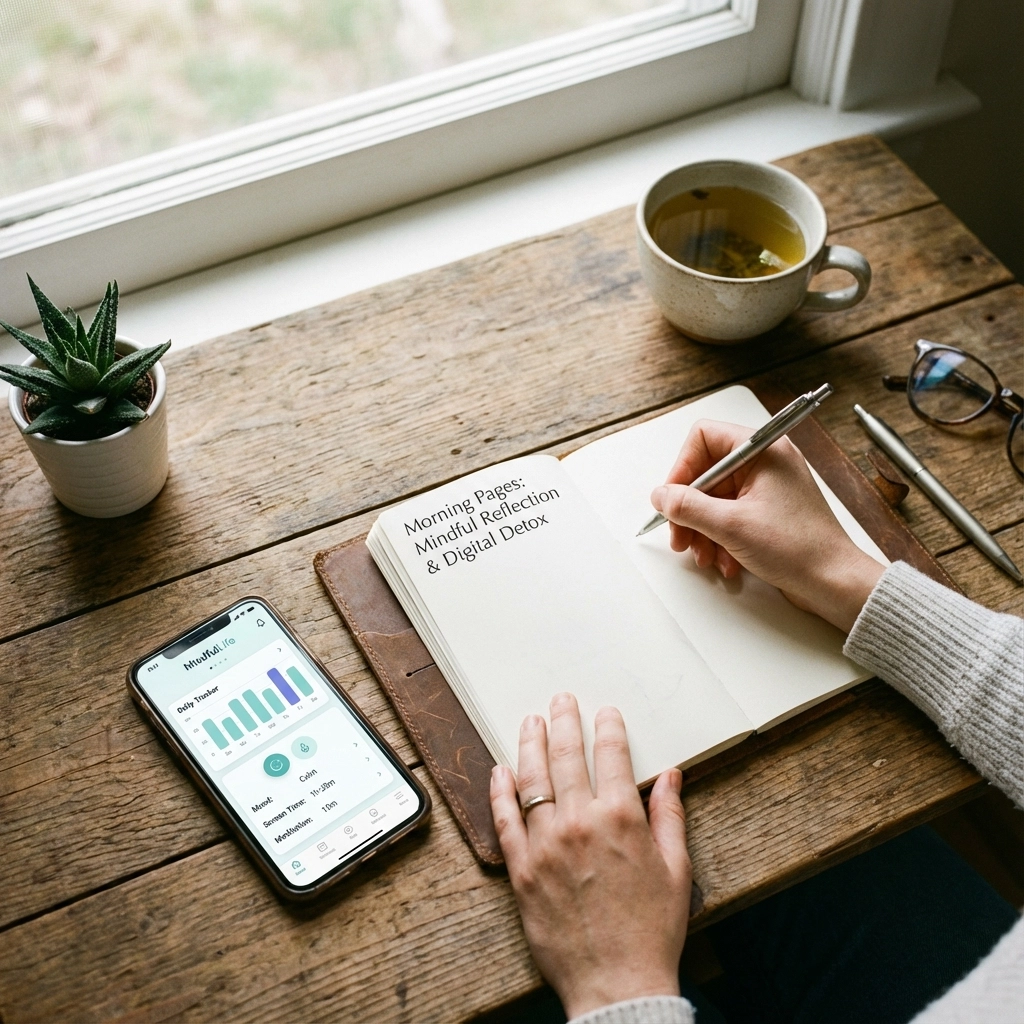
One of the most gentle ways to ease into community is through shared reflection and mindful journaling. When you track your thoughts, feelings, and body signals over time, you develop a clearer sense of your own patterns, and this self-awareness actually helps you show up more authentically in relationships.
Journaling helps you identify your social energy patterns. By tracking your mood, energy, and physical sensations around social interactions, you can start to notice what types of community activities energize you versus which ones deplete you. This isn't about avoiding all challenging social situations; it's about making informed choices about how you spend your social energy.
Sharing your reflections builds intimacy. When you feel ready, sharing insights from your journaling practice with trusted friends, family members, or mental health providers can deepen your connections. You're not just talking about surface-level events; you're sharing your internal experience and inviting others to really see you.
Tools like Somyn create a structured way to share your wellness journey with providers or accountability partners. This can be especially helpful for introverts who prefer having a framework for deeper conversations.
Building Community Through Body Awareness
Your relationship with your body can also be a pathway to community. When you're tuned into your physical sensations (hunger cues, energy levels, stress signals), you become more aware of how social interactions affect your wellbeing.
Notice how your body responds to different types of connection. Does your heart rate slow down during one-on-one conversations? Do you feel energized after creative activities with others? Does your stomach tense up in large groups? This body wisdom can guide you toward the types of community that truly nourish you.
Share the journey of mind-body connection. Many people are learning to listen to their bodies and trust their internal signals. Connecting with others who are on a similar path, whether through online communities, local workshops, or mindful journaling groups, can provide both accountability and understanding.
Moving Beyond Solo Self-Improvement
Here's where many well-intentioned wellness approaches miss the mark: they position healing and growth as something you do alone. While self-reflection and personal practice are absolutely important, humans are wired for connection. We heal in relationship with others, not just in isolation with our self-help books and meditation apps.
This doesn't mean you need to process every emotion with someone else or share every insight. It means recognizing that sustainable wellbeing includes some form of meaningful connection, even if that connection looks different for you than it does for others.
Community provides perspective. When you're struggling with anxiety, body image concerns, or difficult emotions, isolation can make everything feel bigger and more permanent. Community, even just one trusted person, can offer perspective and remind you that you're not alone in your struggles.
Shared experiences normalize challenges. Knowing that other people also struggle with emotional eating, body anxiety, or perfectionism can be incredibly healing. It's not about comparing struggles; it's about recognizing our shared humanity and releasing shame.
Technology as a Community Bridge
For many introverts, technology can serve as a helpful bridge to deeper connection. Digital tools allow you to engage with community at your own pace and comfort level.
Controlled sharing builds confidence. Apps that let you choose what to share and with whom can help you practice vulnerability in small, manageable doses. You might start by sharing a weekly reflection with a therapist or coach, then gradually expand your circle as you feel more comfortable.
Asynchronous connection honors different rhythms. Not everyone processes experiences at the same speed or feels ready to share in real-time. Online communities and digital tools allow for asynchronous connection, so you can respond when you feel ready rather than being put on the spot.
Data can spark deeper conversations. When you track patterns in your mood, energy, or body signals, you have concrete starting points for conversations with providers or friends. Instead of "How are you feeling?" becoming a surface-level exchange, your tracking data can lead to more meaningful discussions about what you're noticing and learning about yourself.
Starting Where You Are
Building community as an introvert isn't about forcing yourself to be more social; it's about finding connection that honors your natural rhythms and preferences. You might start with one meaningful relationship, join an online community around shared interests, or simply begin sharing your wellness journey with a trusted provider.
The goal isn't to become more extroverted; it's to create the kind of community that helps you feel seen, supported, and less alone in your journey toward wellbeing. Whether that looks like weekly coffee dates with one close friend, participating in an online mindful eating group, or sharing your nourishment and movement tracking with a coach, what matters is that it feels authentic and sustainable for you.
Your mental health deserves the support that comes from genuine connection. And that connection can be built gently, intentionally, and in ways that honor exactly who you are.
Comments