Are Wellness Apps Making You Obsessed? 7 Signs It's Time to Switch to Mindful Tracking
- Awaken With Ashley Life Coaching
- Dec 15, 2025
- 6 min read

You download a wellness app with the best intentions. Maybe you want to move your body more mindfully, understand your eating patterns, or simply create healthier habits. But somewhere along the way, something shifts. The gentle nudges become urgent demands. The helpful reminders transform into sources of anxiety. The tool that was supposed to support your wellbeing starts controlling it instead.
If this feels familiar, you're not alone. What mental health professionals now recognize as "fitness tracker addiction" affects more people than we might expect. The very apps designed to help us connect with our bodies can sometimes pull us further away from our natural wisdom.
The good news? Recognizing when tracking becomes counterproductive is the first step toward reclaiming a healthier relationship with both technology and your body. Let's explore the signs together, and discover how mindful tracking can bring you back to what truly matters.
When Support Becomes Obsession
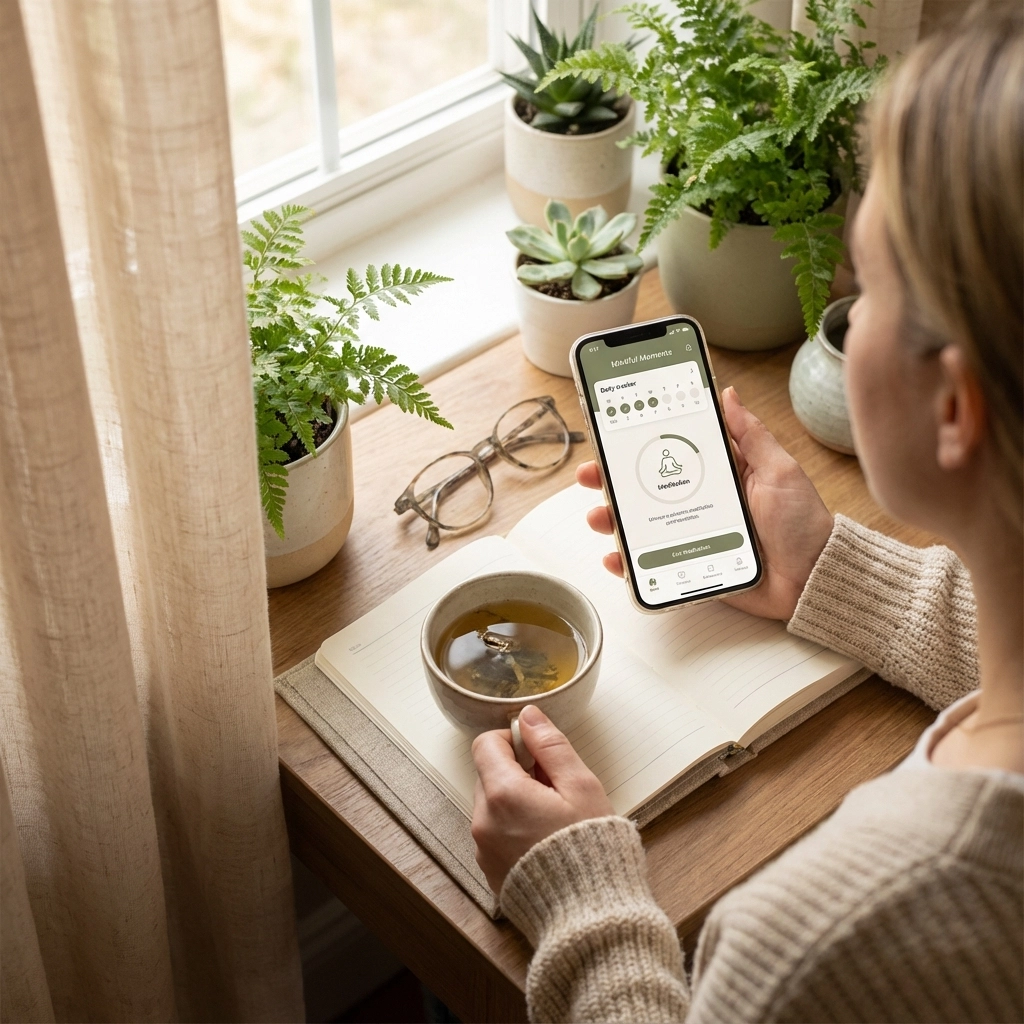
Wellness apps walk a delicate line between helpful and harmful. They can provide valuable insights into our patterns and encourage positive changes. But when we become overly dependent on external validation and data-driven feedback, we risk losing touch with our body's natural signals.
Research shows that excessive reliance on fitness trackers can contribute to anxiety disorders, obsessive-compulsive behaviors, and even disordered eating patterns. The key lies in recognizing when your relationship with tracking technology has shifted from supportive to controlling.
Seven Signs You Might Need a Different Approach
1. Your Device Gets More Attention Than Your Relationships
You find yourself checking your app during conversations, meals, or meaningful moments with loved ones. The urge to log, track, or review your data feels stronger than your desire to be present with the people who matter most to you.
This constant device checking often stems from anxiety about maintaining streaks or hitting targets. When technology demands more attention than your relationships, it's worth questioning whether it's truly serving your overall wellbeing.
2. Numbers Drive Your Mood More Than Your Body Does
Your self-worth rises and falls with the numbers on your screen. A "good" calorie day makes you feel accomplished, while missing a step goal leaves you feeling like you've failed. You've stopped asking "How do I feel?" and started asking "What do my numbers say?"
This disconnection from internal cues can be particularly harmful when it comes to nourishment and movement. Your body has wisdom about what it needs - wisdom that numbers alone cannot capture.
3. Missing a Day Creates Genuine Anxiety

The thought of breaking a streak or missing a day of tracking triggers real distress. You might feel physically uncomfortable, worried, or even panicked when you can't access your app or complete your logging routine.
This anxiety response suggests that tracking has moved beyond being a helpful tool and has become a compulsive behavior. Healthy habits should feel supportive, not anxiety-provoking when occasionally interrupted.
4. You Override Your Body's Signals
Your app suggests more movement, so you push through fatigue or pain. It recommends fewer calories, so you ignore genuine hunger. You've started trusting external algorithms more than your own bodily sensations.
This pattern can be especially concerning because it teaches you to distrust your natural hunger cues, energy levels, and need for rest - the very signals that promote genuine health and balance.
5. Tracking Takes Over Your Mental Energy
You spend significant time researching new features, comparing devices, or obsessing over your data trends. The act of tracking and analyzing has become more prominent in your thoughts than the actual healthy behaviors you intended to develop.
When tracking becomes mentally consuming, it often crowds out other meaningful activities and can turn into a form of digital perfectionism that's difficult to satisfy.
6. You Neglect Other Important Areas of Life
Your wellness tracking goals consistently take priority over work commitments, family time, or other responsibilities. You might skip social events to maintain your routine or feel resentful when life circumstances interfere with your tracking habits.
Balanced wellness includes all aspects of life - relationships, creativity, rest, and meaningful work. When tracking dominates these other elements, it's working against your overall wellbeing rather than supporting it.
7. Your Worth Depends on Perfect Data
You feel accomplished only when your numbers align with your goals, and you feel like you're failing when they don't. Your sense of being a "good" or "healthy" person has become entirely dependent on external metrics rather than how you feel or what your body needs.
This pattern can be particularly harmful because it creates an all-or-nothing mentality that doesn't allow for the natural fluctuations of life, stress, hormonal changes, or varying needs your body experiences.
Understanding Why This Happens

Wellness app obsession doesn't develop because you lack willpower or self-control. These apps are designed to be engaging, often using psychological principles that can become addictive. Features like streaks, badges, social comparisons, and constant notifications tap into our brain's reward systems in ways that can become compulsive.
Additionally, many of us have learned to distrust our bodies' natural signals, making external validation feel safer than internal awareness. We might have received messages throughout our lives that our hunger cues are unreliable, that we can't trust our cravings, or that we need external guidance to make "good" choices.
This disconnection from our internal wisdom creates a perfect environment for apps to fill the void with external structure and validation.
The Hidden Costs of Obsessive Tracking
Beyond the obvious signs, excessive wellness tracking can have subtle but significant impacts on your mental and physical health. Research indicates connections between fitness tracker obsession and increased anxiety, disrupted eating patterns, and even body dysmorphia.
Physically, overreliance on tracking can lead to injuries from ignoring pain signals, nutritional imbalances from following app recommendations over body cues, and burnout from pushing through genuine fatigue.
Perhaps most importantly, obsessive tracking can rob you of the joy and spontaneity that make healthy living sustainable. When every bite, step, and movement needs to be logged and analyzed, the natural pleasure of nourishing your body and moving joyfully can disappear.
Making the Gentle Shift to Mindful Tracking

The solution isn't necessarily to abandon all forms of health tracking. Instead, you can cultivate a more mindful approach that puts your internal wisdom back in the driver's seat while using technology as a gentle supporter rather than a strict supervisor.
Start with Body Awareness
Begin by setting aside time each day to check in with your body without any devices. Notice your energy levels, hunger signals, mood, and physical sensations. This practice helps rebuild trust in your internal guidance system.
Try asking yourself questions like: "How does my body feel right now?" "What kind of movement would feel good today?" "Am I eating because I'm hungry or for other reasons?"
Expand Your Definition of Wellness
True wellness encompasses mental health, meaningful relationships, creative expression, adequate rest, and emotional balance - areas that apps rarely track comprehensively. Consider keeping a simple journal focused on these broader aspects of wellbeing.
You might explore questions about gratitude, emotional patterns, stress levels, sleep quality, or moments of joy. This broader perspective helps prevent tunnel vision around trackable metrics.
Use Technology as a Tool, Not a Teacher
If you continue using wellness apps, establish clear boundaries. Set specific times for checking your data rather than constantly monitoring throughout the day. Consider turning off notifications or only opening apps when you consciously choose to, not out of compulsion.
You might also experiment with less frequent tracking - weekly check-ins instead of daily logging, or seasonal reviews rather than constant monitoring.
The Somyn Approach to Mindful Tracking
At Somyn, we believe in gentle awareness over obsessive measurement. Our approach focuses on building a loving relationship with your body through mindful check-ins that honor both your physical and emotional needs.
Rather than counting every calorie or step, our mindful journaling approach invites you to notice patterns with curiosity rather than judgment. We encourage tracking feelings, energy levels, and internal experiences alongside any external metrics you choose to monitor.
This mind-body connection approach helps you develop trust in your own wisdom while using technology as a supportive tool rather than a controlling force.
Your Next Gentle Steps

If you recognize yourself in these patterns, please know that change is possible and you're already taking an important step by bringing awareness to your relationship with tracking.
Consider starting small. Maybe today you could eat one meal without logging it, focusing instead on how it tastes, how hungry you are, and how satisfied you feel afterward. Or take a walk without any device, simply noticing how your body wants to move.
Remember that developing a healthier relationship with wellness tracking is itself a practice in self-compassion. Be patient with yourself as you learn to trust your internal guidance again.
Your body has been waiting patiently to reconnect with you. Every moment offers a new opportunity to listen with kindness to what it really needs.
Comments