Wordless Journaling: The 3-Minute Mental Health Hack Everyone's Talking About
- Awaken With Ashley Life Coaching
- Dec 5, 2025
- 5 min read

Sometimes the most profound conversations happen without words. Your body whispers truths that your mind hasn't learned to articulate yet, and wordless journaling creates space to hear these gentle messages.
Suppose traditional journaling feels overwhelming (staring at blank pages, searching for the perfect words, or feeling stuck in your thoughts). In that case, wordless journaling might be the gentle alternative you've been looking for. This emerging practice invites you to explore your inner landscape through symbols, colors, sensations, and images rather than sentences.
What Is Wordless Journaling?
Wordless journaling is exactly what it sounds like: a way of reflecting and processing emotions without relying on written language. Instead of filling pages with thoughts and analysis, you might draw simple shapes that represent how you're feeling, use colors to capture your mood, or create visual maps of sensations in your body.
This practice recognizes that not everything we experience can be easily translated into words. Sometimes a jagged line captures anxiety better than a paragraph of explanation. A warm yellow circle might express contentment more accurately than any adjective.

The beauty of wordless journaling lies in its accessibility. You don't need to be artistic, articulate, or insightful. You simply need to be willing to experiment with expressing yourself beyond the constraints of language.
The Science Behind Silent Reflection
Research consistently shows that journaling interventions can reduce mental health symptoms by an average of 5%, with even greater benefits for anxiety and PTSD. But what makes wordless approaches particularly powerful?
Our brains process visual and sensory information differently than verbal thoughts. When we draw, color, or create visual representations, we engage the right hemisphere of our brain - the part associated with creativity, intuition, and emotional processing. This can help bypass the analytical left brain that sometimes keeps us stuck in loops of overthinking.
Studies on art therapy and expressive therapies suggest that non-verbal processing can help people access emotions and experiences that feel too complex or overwhelming for words. When you create a visual representation of how you feel, you're essentially giving your emotions a form they can inhabit outside of your body.
This externalization of getting feelings out of your head and onto paper creates the same psychological distance that makes traditional journaling so effective, but often with less mental effort and emotional overwhelm.
Your 3-Minute Practice
The magic of wordless journaling isn't in creating masterpieces; it's in the brief, gentle act of translating internal experience into external form. Here's how you can begin with just three minutes:
Minute 1: Notice Close your eyes and take a few deep breaths. Ask yourself: "How am I feeling right now?" Notice what comes up, but don't analyze it. Simply observe the sensation, emotion, or general sense of your inner state.
Minute 2: Express Open your eyes and, using whatever materials you have: pen, pencil, colored pencils, or even your finger on a screen, and create something that represents what you noticed. This might be:
A color or combination of colors
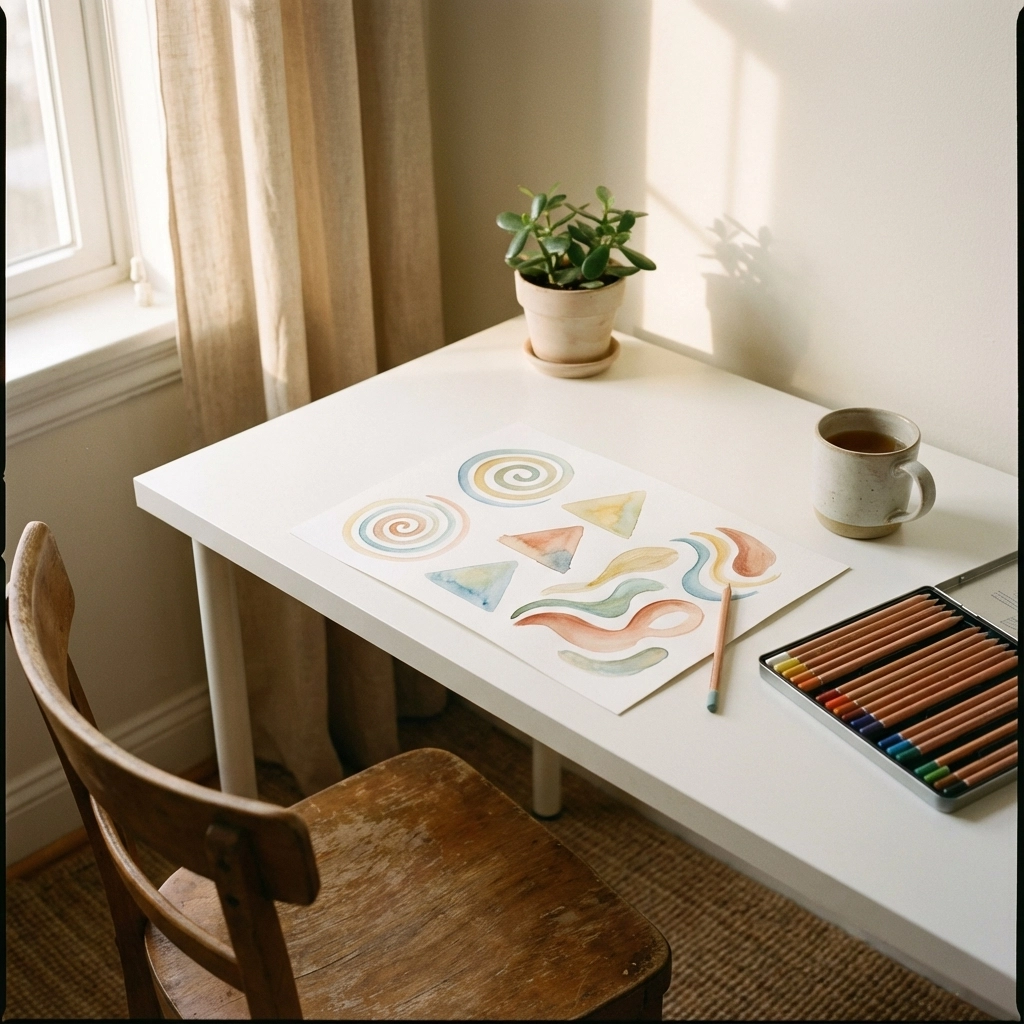
Simple shapes or patterns
A single line that captures the quality of your feeling
Abstract symbols that feel meaningful to you
Don't think too much. Let your hand move intuitively.
Minute 3: Acknowledge Look at what you've created without judgment. You might notice something new about your emotional state, or you might simply feel a sense of completion. Both responses are perfectly valid.
Different Ways to Practice Wordless Journaling
The beauty of this approach is its flexibility. You can adapt it to your preferences, materials, and emotional needs:
Color Mapping Use different colors to represent different emotions or energy levels. You might create a color palette for your day, or fill shapes with colors that match how different parts of your body feel.
Symbol Creation Develop your own personal symbol system. Maybe triangles represent stress, circles represent peace, and wavy lines represent uncertainty. Over time, these symbols can help you quickly identify and track emotional patterns.
Body Scanning Draw a simple outline of a human figure and mark different areas with colors, symbols, or textures to represent how each part of your body feels. This combines mindful body awareness with creative expression.
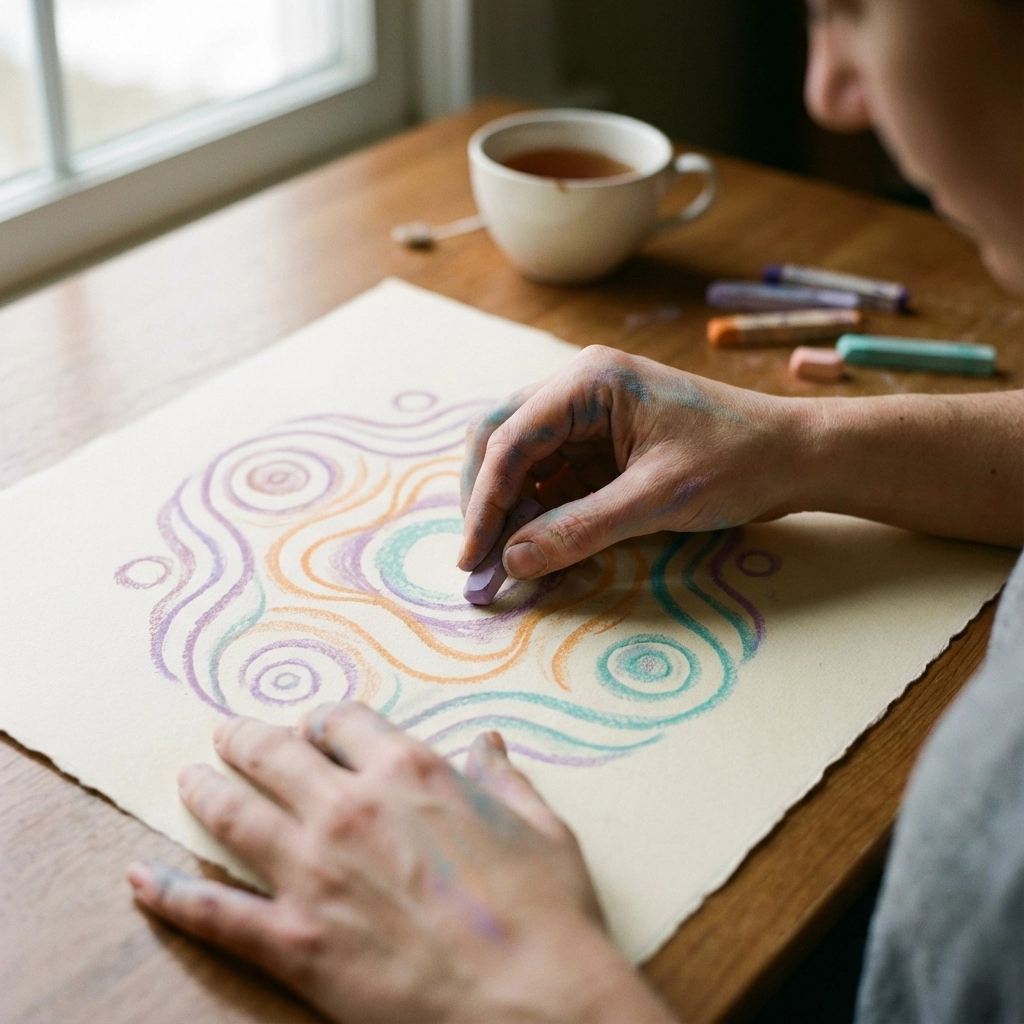
Mandala Drawing Create simple circular designs, starting from the center and working outward. The repetitive nature can be meditative, and the finished design often reflects your inner state in surprising ways.
Texture and Line Quality Use different pressures, strokes, and textures to express emotions. Heavy, dark lines might represent frustration, while light, flowing curves could capture contentment.
Why This Works When Words Don't
Many of us have complicated relationships with traditional journaling. Maybe you worry about grammar, feel pressure to be insightful, or get caught in circular thinking patterns. Wordless journaling sidesteps these common obstacles.
Without the pressure of finding the right words, you can access emotions more directly. There's no need to make logical sense or create coherent narratives. Your unconscious mind can communicate through color, shape, and movement in ways that surprise and inform you.
This practice also honors the reality that emotions aren't always verbal experiences. Joy might feel like golden spirals. Anxiety could look like jagged red lines. Sadness might be deep blue pools. When you give these feelings visual form, you're working with your natural emotional language rather than forcing translation into words.
Getting Started Without Pressure
The key to successful wordless journaling is releasing any expectations about the outcome. This isn't about creating beautiful art or profound insights. It's about giving yourself three minutes of gentle, creative attention.
Start with materials you have readily available. A simple pen and paper work perfectly. If you enjoy color, basic colored pencils or markers can add richness to the experience. Digital tools are also effective; many people find that drawing on tablets or phones feels less intimidating than working on paper.
Consider creating a simple ritual around your practice. Maybe you light a candle, play soft music, or find a quiet spot where you feel comfortable. These small gestures signal to your nervous system that this is a safe time for self-expression.
Remember that consistency matters more than perfection. Three minutes of wordless expression done regularly will be more beneficial than occasional hour-long sessions. This practice works best when it becomes a gentle habit rather than an intense creative project.
How This Supports Your Overall Well-Being
When practiced regularly, wordless journaling can help you develop greater emotional awareness and self-compassion. By repeatedly checking in with yourself through this gentle creative process, you're training your attention to notice internal states before they become overwhelming.
This increased awareness can improve your relationship with difficult emotions. Instead of avoiding or fighting uncomfortable feelings, you learn to acknowledge them with curiosity and creativity. Over time, this can lead to greater emotional resilience and self-understanding.
For those interested in more comprehensive mind-body awareness practices, tools like Somyn offer supportive approaches to reflection that honor both your emotional and physical experiences. The key is finding methods that feel sustainable and genuinely helpful to you.
Moving Forward Gently
Wordless journaling invites you to trust your intuitive wisdom and express yourself without the constraints of language. In our word-heavy world, this practice offers a refreshing alternative: a way to process emotions, reduce stress, and connect with yourself that requires nothing more than a willingness to play with colors, shapes, and symbols.
Your three minutes of wordless expression might become a favorite part of your day: a brief pause where you can translate your inner world into something visible, acknowledge your feelings without judgment, and move forward with greater clarity and self-compassion.
The invitation is simple: grab whatever drawing materials you have nearby, set a gentle timer for three minutes, and see what wants to be expressed through your hands rather than your words. Your emotional well-being might thank you in ways you never expected.
Comments