Are Calorie Counting Apps Making You Obsessed? Here's the Mindful Alternative Everyone's Talking About
- Awaken With Ashley Life Coaching
- Dec 3, 2025
- 5 min read

Picture this: You're standing in your kitchen at 9 PM, calculating whether you have enough calories left for that apple you're craving. You open your tracking app, scan the barcode, realize you're 12 calories over your limit, and put the fruit back. Sound familiar? If you've found yourself in this scenario, or worse, skipping meals to "save" calories for later, you're not alone in wondering if your wellness app has become more of a prison than a helper.
The uncomfortable truth? Research shows that 73% of people with eating disorders report that calorie counting apps specifically contributed to their symptoms. That's not a small side effect, that's a red flag the size of Texas.
The Psychology Behind the Obsession
Calorie counting apps didn't set out to create food anxiety. They were designed to help people make informed choices about their health. But somewhere between the red and green color coding, the streak counters, and the "you're under budget!" notifications, many users find themselves trapped in a cycle that feels less like wellness and more like punishment.
The apps create what psychologists call negative reinforcement loops. When you see that dreaded red number (meaning you've exceeded your calorie limit), your brain registers it as failure. When it's green, you get a small hit of dopamine. Over time, this trains your brain to associate your self-worth with staying under an arbitrary number calculated by an algorithm that knows nothing about your actual hunger, energy needs, or emotional state.
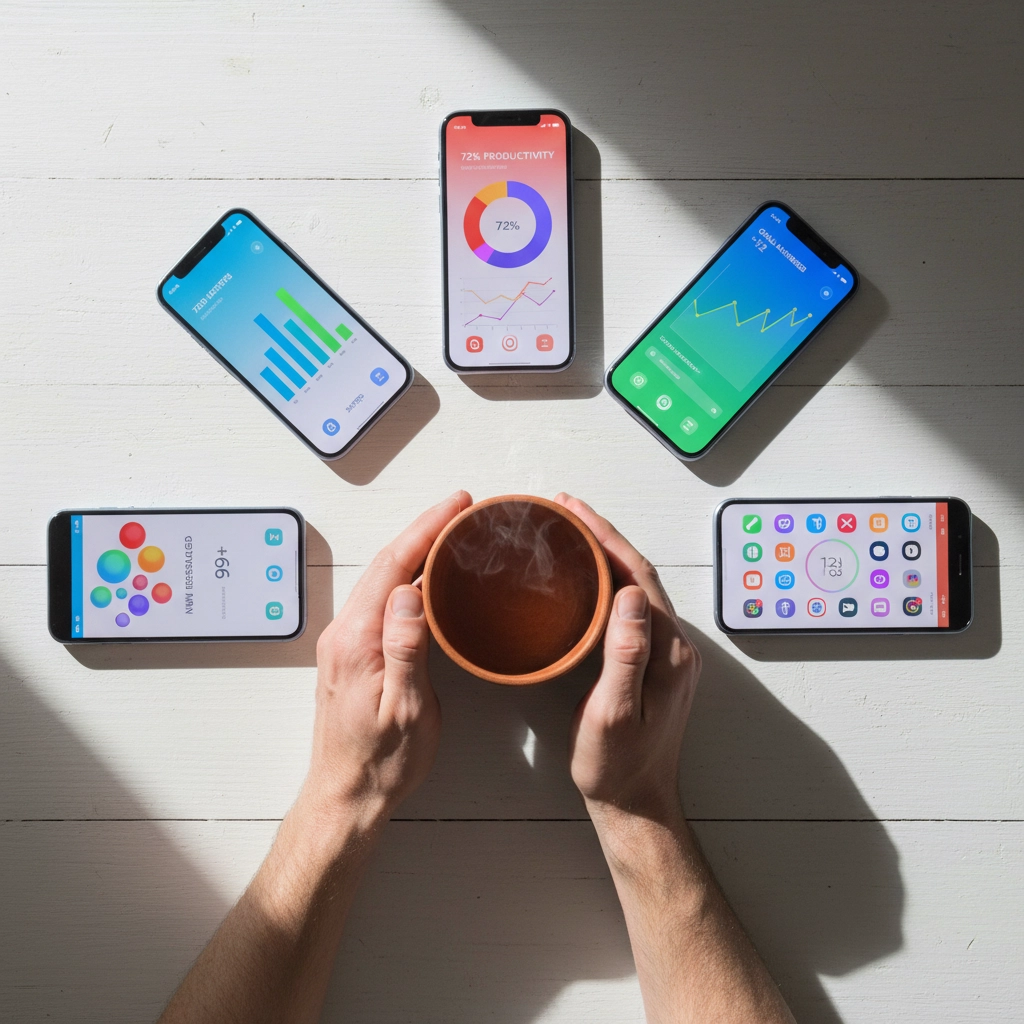
What's particularly insidious is how these apps encourage you to ignore your body's natural wisdom. That rumbling stomach at 3 PM? The app says you've already had lunch, so maybe you should wait until dinner. Those hunger pangs after your morning workout? Well, you're already at 400 calories for the day, so perhaps just some water will do.
When Numbers Become the Enemy
The research paints a concerning picture. A study found that 26% of people using fitness and weight loss apps reported that these applications actually perpetuated their disordered eating behaviors. The more someone relied on an app to dictate their eating decisions, the more likely they were to develop symptoms that met eating disorder criteria.
But here's what's really troubling: the apps are often wildly inaccurate. That "medium banana" you logged could vary by 50+ calories depending on its actual size. The "calories burned during your 30-minute walk" could be off by hundreds depending on your pace, terrain, and individual metabolism. You're making restrictive decisions based on estimates that could be completely wrong.
And let's talk about the mental bandwidth this steals from your day. How many minutes have you spent agonizing over whether to log that handful of nuts as 14 almonds or 15? How often have you chosen what to eat based not on what sounded nourishing or satisfying, but on what would fit your remaining calorie budget?
The Mindful Alternative That's Changing Everything
Here's where things get interesting and hopeful. There's a growing movement toward what researchers call "embodied wellness," and it's the complete opposite of the numbers game. Instead of tracking external metrics, it invites you to tune into your internal ones.
This approach recognizes something revolutionary: your body is actually incredibly smart. It knows when it needs fuel, when it's satisfied, when it wants to move, and when it needs rest. The problem isn't that your body can't be trusted: it's that you've been taught to ignore its signals in favor of an app's calculations.
This is exactly why we created Somyn. Instead of asking "How many calories did you eat today?", we ask "How did your body feel before, during, and after eating?" Instead of tracking steps, we explore "What kind of movement brought you joy today?" It's the difference between interrogation and conversation.
How Body Wisdom Actually Works
When you step away from the calorie counting obsession, something beautiful happens: you start noticing signals you've been trained to ignore. Hunger isn't just an empty stomach: it might show up as difficulty concentrating, slight irritability, or that specific kind of fatigue that food can fix. Fullness isn't about clearing your plate: it's about that moment when food stops tasting as good as the first few bites.
Somyn's approach helps you rediscover these signals through:
Hunger and Fullness Check-ins: Instead of just logging food, you pause before and after eating to notice what your body is telling you. Are you eating because the clock says it's lunchtime, or because you actually feel hungry? There's no wrong answer: just awareness.
Emotional Journaling: Often, the urge to eat (or not eat) has nothing to do with physical hunger. Maybe you're bored, stressed, celebrating, or processing difficult emotions. Our journaling features help you explore these connections without judgment.
Movement Reflection: Rather than tracking calories burned, you explore how different types of movement feel in your body. Did that morning walk leave you energized or depleted? Did dancing in your living room bring you joy? This builds a sustainable relationship with physical activity.
The Permission to Trust Yourself
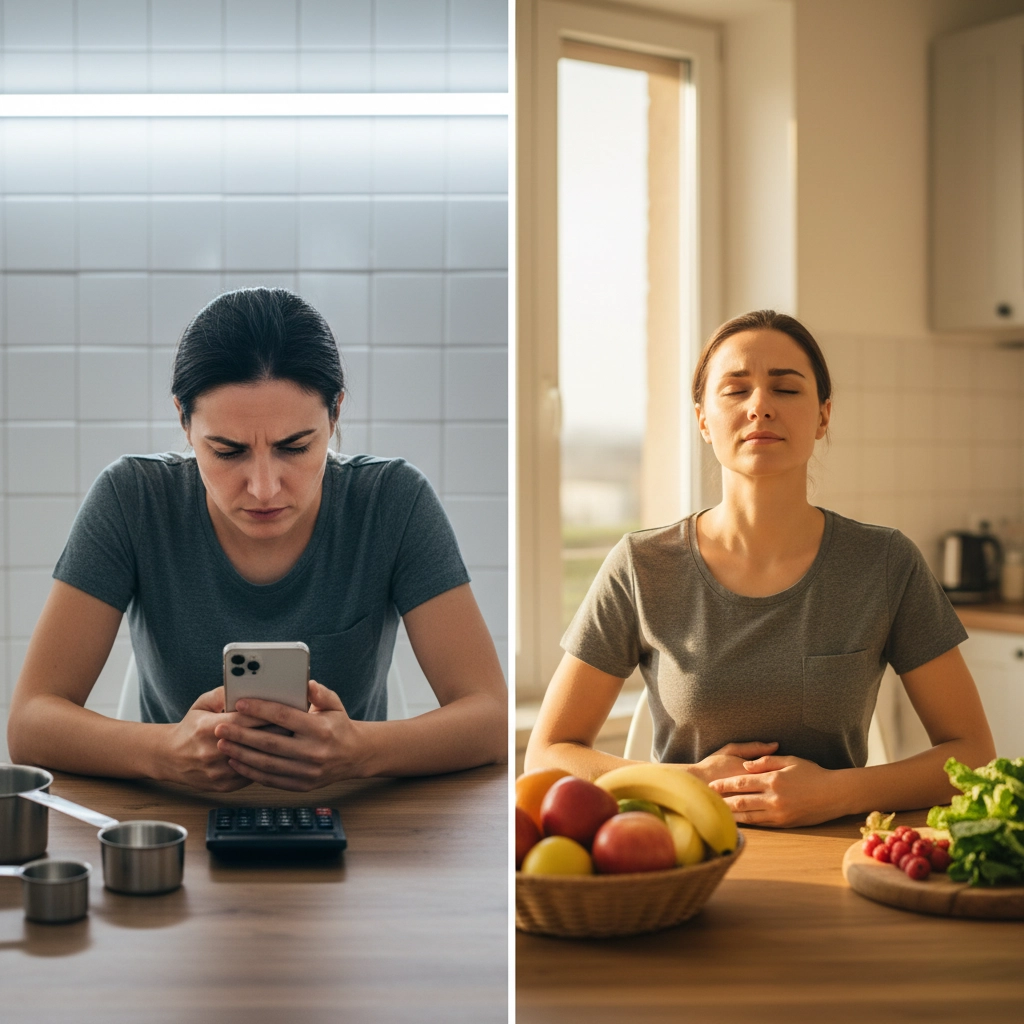
One of the most radical things about this approach is that it gives you permission to trust your own experience. It suggests that you, not an algorithm, are the expert on your body. This can feel scary at first, especially if you've been outsourcing these decisions to apps for months or years.
But here's what happens when people make this shift: they often discover they naturally gravitate toward foods that make them feel good, eat appropriate amounts without measuring, and find movement they actually enjoy. It turns out that when you're not fighting your body's wisdom, it tends to guide you toward balance.
The key is approaching this transition with compassion. If you've been locked in the calorie counting cycle, your hunger and fullness cues might feel rusty at first. That's completely normal. Research shows that it takes time to rebuild trust with your body after periods of external control.
Making the Transition
If you're ready to step away from the obsession but feeling nervous about it, you're not alone. Many people worry that without the external control of tracking, they'll somehow lose all sense of balance. The truth is, the opposite usually happens.
Start small. Maybe you take one day a week where you don't open your tracking app and instead check in with your body before meals. Notice what you observe. Does food taste different when you're not thinking about its caloric value? Do you naturally stop eating when you feel satisfied, even if food remains on your plate?
Somyn's approach supports this transition gently. Instead of going cold turkey from tracking to nothing, you're learning a different kind of awareness: one that honors your internal experience rather than external rules.
Beyond the Numbers Game
The most profound shift happens when you realize that wellness isn't about perfection or control; it's about connection. Connection to your body, your emotions, your actual needs in the present moment. It's about learning to nourish yourself not because an app told you to, but because you've tuned into what nourishment actually feels like for you.
This doesn't mean throwing all structure out the window or never being mindful about food choices. It means making those choices from a place of attunement rather than anxiety, curiosity rather than compulsion.
When you're connected to your body's wisdom, eating becomes simpler. Movement becomes more joyful. And those obsessive thoughts about numbers? They gradually fade into the background, replaced by a quiet confidence in your own internal guidance system.
The mindful alternative everyone's talking about isn't just another wellness trend; it's a return to something fundamental that got lost in all the tracking and measuring. It's the revolutionary act of trusting yourself.
Comments